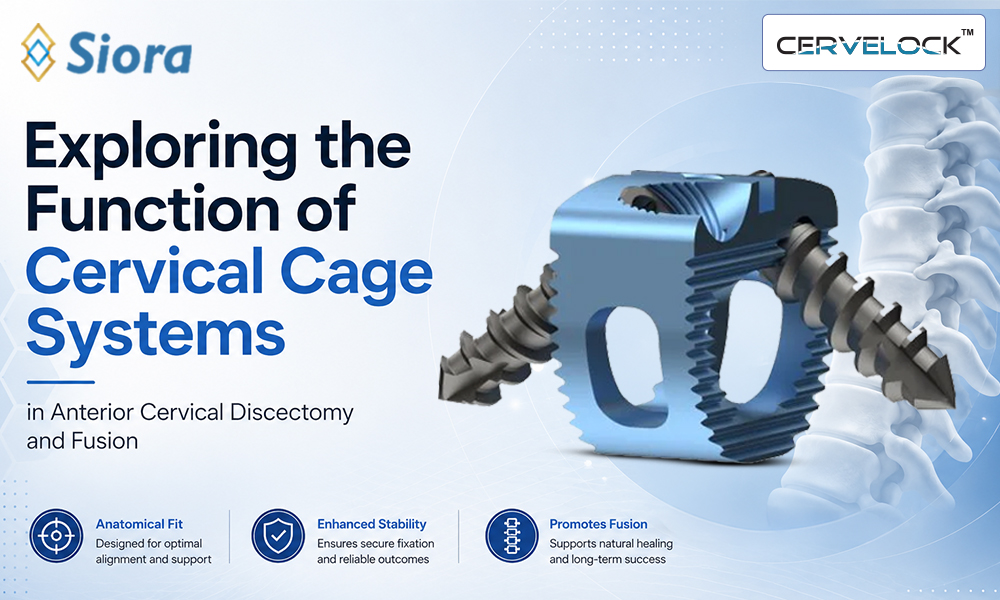
Neck pain accompanied by numbness, tingling, or weakness in the arms can significantly affect a person’s quality of life. In many cases, these symptoms arise due to cervical disc degeneration, herniated discs, or spinal instability in the neck region. When conservative treatment options fail to provide relief, surgeons often recommend a procedure known as Anterior Cervical Discectomy and Fusion (ACDF). One of the key components that contributes to the success of this surgery is the cervical cage system.
Understanding how cervical cage systems function in ACDF can help patients and healthcare professionals appreciate their importance in restoring spinal stability and promoting long-term healing.
Understanding Anterior Cervical Discectomy and Fusion (ACDF)
ACDF is a commonly performed surgical procedure designed to treat various cervical spine disorders. During the surgery, the damaged or diseased intervertebral disc is removed through an anterior approach, meaning the surgeon accesses the cervical spine from the front of the neck.
Once the problematic disc has been removed, an empty space remains between the adjacent vertebrae. Leaving this space unfilled may compromise spinal alignment and stability. This is where cervical cage systems play a crucial role.
What Is a Cervical Cage System?
A cervical cage system is an implant inserted into the disc space following discectomy. The cage acts as a spacer, maintaining the natural height between vertebrae while supporting fusion between the spinal segments.
Modern cervical cages are manufactured using biocompatible materials such as titanium, polyether ether ketone (PEEK), or a combination of both. These materials are selected because of their strength, durability, and compatibility with human tissue.
In many cases, the cage is filled with bone graft material to encourage new bone growth and facilitate successful fusion.
Primary Functions of Cervical Cage Systems
Restoring Disc Height
Degenerated or collapsed cervical discs often reduce the space between vertebrae. This narrowing can place pressure on nearby nerves, resulting in pain and neurological symptoms.
A cervical cage restores the normal disc height, helping relieve compression on nerve roots and improving overall spinal alignment.
Maintaining Spinal Stability
After disc removal, the operated spinal segment becomes unstable. The cervical cage provides immediate structural support by stabilizing the vertebrae until solid bone fusion occurs.
This stability is essential for proper healing and helps minimize excessive motion at the surgical site.
Promoting Bone Fusion
Successful ACDF depends on achieving fusion between adjacent vertebrae. Cervical cages are designed to hold bone graft material securely within the implant.
Over time, new bone grows through and around the cage, creating a solid bridge between vertebral bodies. This biological fusion eliminates abnormal movement and enhances long-term spinal stability.
Preserving Cervical Alignment
Maintaining the natural curvature of the cervical spine is important for balanced posture and normal biomechanics. Many cervical cage systems are anatomically designed to support cervical lordosis, helping preserve or restore the spine’s natural alignment.
Proper alignment may also reduce stress on neighboring spinal levels.
Advancements in Cervical Cage Design
Technological advancements have led to significant improvements in cervical cage systems. Contemporary designs feature porous surfaces, optimized geometries, and enhanced fixation mechanisms that improve implant stability and encourage bone ingrowth.
Some cervical cages incorporate integrated screws or locking systems, reducing the need for additional anterior plating in selected cases. These low-profile designs may help minimize soft tissue irritation while simplifying the surgical procedure.
Furthermore, imaging-friendly materials such as PEEK allow surgeons to assess postoperative fusion progress more effectively during follow-up examinations.
Benefits Associated with Cervical Cage Systems
The use of cervical cage systems in ACDF offers several advantages, including:
- Improved spinal stability immediately after surgery
- Enhanced fusion potential
- Restoration of foraminal height and nerve decompression
- Preservation of cervical alignment
- Reduced risk of graft collapse
- Better overall clinical outcomes for patients
Final Thoughts
Cervical cage systems have become an integral component of modern ACDF procedures. By restoring disc height, stabilizing the cervical spine, and promoting successful fusion, these spine orthopaedic implants play a vital role in achieving favorable surgical outcomes.

