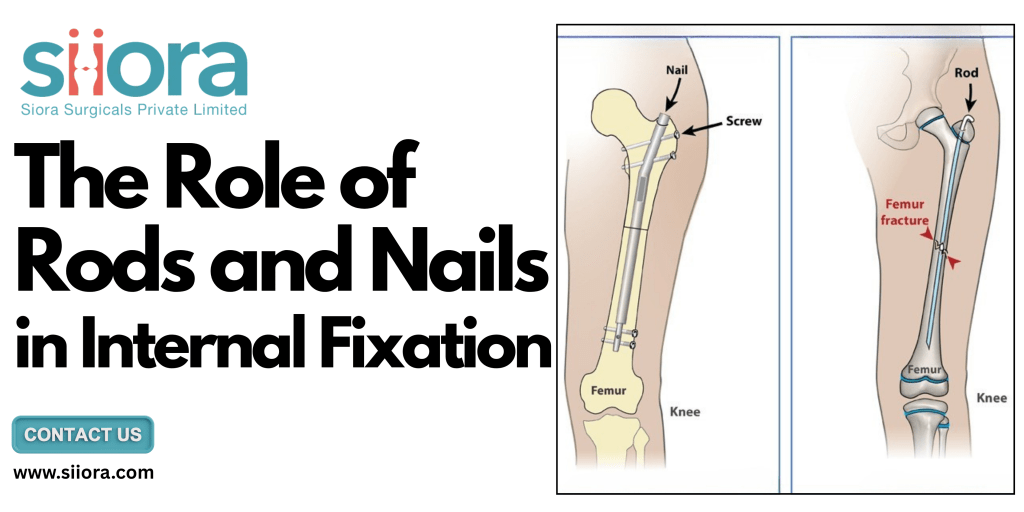
In orthopedic surgery, achieving stability and proper healing of fractured bones is crucial. Among the various methods to treat fractures, internal fixation using rods and nails has emerged as a highly effective technique. This method, which involves inserting metallic implants directly into the bone, provides stable support and promotes optimal bone healing. In this blog, we’ll explore the pivotal role of rods and nails in internal fixation, focusing on modern orthopedic practices and specialized devices like the IM femoral nail, TFN nailing, and other orthopedic nails.
What is Internal Fixation?
Internal fixation is a surgical procedure that stabilizes and aligns broken bones using implants such as screws, plates, rods, or nails. Unlike external fixation methods, which use external frames and pins, internal fixation devices are placed entirely within the body. This method minimizes the risk of infection, enhances healing, and allows early mobilization of the patient.
The Rise of Intramedullary Nailing
One of the most significant advances in internal fixation is the use of intramedullary nails. These are long, metal rods inserted into the medullary canal of the bone (the central cavity of long bones like the femur or tibia). IM nails act as internal splints, providing robust stabilization by aligning the bone fragments from within.
Intramedullary nailing offers several key advantages:
Load-sharing support
Unlike plates and screws, IM nails share the mechanical load with the bone, reducing stress shielding and promoting natural bone healing.
Minimally invasive
Smaller incisions and reduced soft-tissue damage lead to faster recovery and lower risk of infection.
Early weight-bearing
Patients can often begin gentle weight-bearing soon after surgery, enhancing functional recovery.
The IM Femoral Nail: A Game Changer for Femur Fractures
The IM femoral nail is a specialized type of intramedullary nail designed to treat fractures of the femur (thigh bone). Given the femur’s critical role in mobility and weight-bearing, ensuring optimal alignment and stability is essential.
Key benefits of the IM femoral nail include:
Anatomical Alignment
The nail’s shape mimics the natural curvature of the femur, providing better stabilization.
Rotational Control
Locking screws at both ends of the nail prevent rotation of bone fragments, maintaining precise alignment.
Versatile Use
IM femoral nails can treat various femoral fractures, including shaft fractures, intertrochanteric fractures, and subtrochanteric fractures.
TFN Nailing: Advancing Hip Fracture Management
Hip fractures, particularly in the elderly, can severely impact mobility and independence. TFN nailing (Trochanteric Femoral Nail nailing) is an advanced technique that addresses these challenges effectively. TFN nails are specifically designed for proximal femur fractures, including intertrochanteric and subtrochanteric fractures.
Here’s why TFN nailing is a preferred method:
Superior stability
TFN nails offer enhanced stability, crucial for managing fractures in osteoporotic bones.
Minimized risk of implant failure
By distributing stress evenly across the nail, TFN nails reduce the likelihood of implant failure.
Enhanced healing
With early mobilization and improved load distribution, TFN nailing promotes faster recovery and better long-term outcomes.
The Surgical Technique: How IM Nails Are Inserted?
The success of intramedullary nailing depends not only on the design of the implant but also on the surgical technique. Here’s a general overview of the procedure:
Patient positioning
The patient is positioned to allow clear access to the fracture site, usually on a fracture table.
Entry point
A small incision is made, and the entry point for the IM nail is created using a guidewire and reamers.
Reaming
The medullary canal is widened to accommodate the IM nail, ensuring a snug fit.
Nail insertion
The IM nail is carefully inserted into the canal, spanning the fracture site.
Locking screws
Screws are inserted at the proximal and distal ends of the nail to lock it in place and prevent rotation or telescoping of the bone fragments.
Closure
The incisions are closed, and the patient’s limb is carefully mobilized to ensure proper alignment and stability.
This technique requires skill and precision to avoid complications and ensure the best possible outcomes.
Advantages of Rods and Nails in Internal Fixation
The shift towards internal fixation with rods and nails has revolutionized orthopedic trauma care. Let’s recap the main advantages:
Reduced soft tissue trauma
Smaller incisions and minimal soft tissue disruption.
Enhanced stability
IM nails provide load-sharing support, essential for natural bone healing.
Faster recovery
Early weight-bearing and mobility reduce the risk of complications like muscle atrophy or joint stiffness.
Versatility
From the IM femoral nail to TFN nailing, orthopedic nails cater to a wide range of fractures.
Minimized infection risk
As implants are internal, there’s no external pin site to harbor bacteria.
Conclusion
The role of rods and nails in internal fixation has transformed the way fractures are managed today. Devices like the IM femoral nail, TFN nailing systems, and other orthopedic nails offer unparalleled benefits, including superior stability, minimally invasive techniques, and quicker recovery. As technology continues to evolve, these advanced intramedullary nail systems promise even better outcomes for patients worldwide.
If you or a loved one has suffered a fracture, consulting with an experienced orthopedic surgeon about the potential of intramedullary nailing can make all the difference.
For more information on IM nails, TFN nailing, and other internal fixation options, get in touch with our expert team today.

